Magen David Synagogue

About

Magen David Synagogue, Byculla, Mumbai is one of the most important surviving symbols of the city’s historic Jewish presence and a key religious landmark associated with the Baghdadi Jewish community. Established in the mid-19th century, the synagogue reflects the period when Mumbai emerged as a major trading port under British rule and attracted Jewish merchants from the Middle East.

  • Built with financial support from Sir Jacob Sassoon, a prominent philanthropist and businessman
  • Served Sephardic and Baghdadi Jewish families settled in the Byculla–Mazgaon region
  • Functions as an Orthodox synagogue, following traditional Jewish worship practices
  • Known for its calm, non-commercial environment focused on prayer and community life
  • Continues to operate despite the small size of Mumbai’s present-day Jewish population

The synagogue played a central role in preserving Jewish religious traditions, community gatherings, and cultural continuity during the colonial era. Its existence highlights Mumbai’s long-standing multicultural fabric, where diverse faiths developed side by side. Unlike more prominent tourist landmarks, Magen David Synagogue, Byculla, Mumbai is valued primarily for its heritage significance rather than visitor footfall.

Today, Magen David Synagogue is frequently referenced in academic studies, heritage documentation, and historical research related to Indian Jewish communities. It stands as a reminder of Jewish migration patterns, trade networks, and religious tolerance in colonial Bombay, making it an important site for those interested in history, architecture, and cultural heritage.

Magen David Synagogue

History & Origins

Magen David Synagogue, Byculla, Mumbai was established during the mid-19th century, a period when Mumbai was rapidly developing into a major colonial trading centre. The synagogue emerged as a direct result of the migration of Baghdadi Jews from regions such as Iraq and the Middle East, who arrived in the city seeking commercial opportunities under British rule.

  • Construction of the synagogue was completed in the 1860s, aligning with the expansion of Byculla as a residential suburb

  • Funded by Sir Jacob Sassoon, a leading figure of the influential Sassoon family

  • Served as a religious and social centre for Sephardic Jewish families living in Byculla and Mazgaon

  • Reflected the strong connection between Jewish trade networks and colonial Mumbai’s economy

The establishment of Magen David Synagogue, Byculla, Mumbai coincided with the growth of Jewish institutions such as schools, cemeteries, and community spaces across the city. Along with two other synagogues in Mumbai, it became one of the primary centres of Jewish worship and identity.

Despite demographic changes and migration in the 20th century, the synagogue has remained functional. Its continued presence illustrates the enduring legacy of Jewish settlement in Mumbai and stands as a historical marker of religious coexistence during the British era.


Architecture & Design

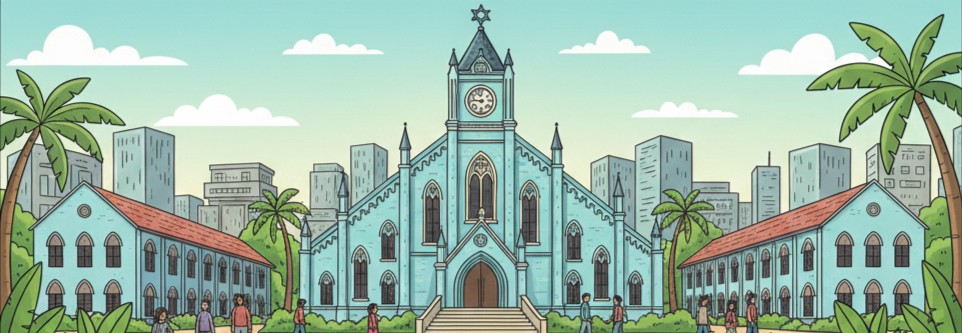
Magen David Synagogue, Byculla, Mumbai reflects a simple yet purposeful architectural style typical of 19th-century religious buildings constructed by migrant communities in colonial Mumbai. The synagogue was designed to support Orthodox Jewish worship practices, prioritising functionality, symmetry, and ritual requirements over ornamentation.

  • Rectangular prayer hall organised around a central nave

  • Elevated bimah positioned to allow clear visibility during prayers

  • Wooden furnishings including benches, railings, and interior fittings

  • Women’s gallery located on the upper level, following Orthodox traditions

  • Prominent use of the Star of David as a religious and symbolic element

The exterior of Magen David Synagogue, Byculla, Mumbai is modest, blending into the surrounding Byculla neighbourhood rather than dominating the streetscape. Colonial-era construction materials and restrained detailing reflect the practical approach adopted by the Baghdadi Jewish community.

Inside, the calm spatial arrangement creates a focused atmosphere for prayer and reflection. Natural light and uncluttered interiors enhance the sense of quiet reverence. The architectural design supports religious continuity rather than visual grandeur, making the synagogue an authentic representation of Jewish worship spaces developed outside Europe during the British period.


Religious Significance & Practices

Magen David Synagogue, Byculla, Mumbai holds deep religious importance for the Jewish community and continues to function as an Orthodox place of worship. It was established to serve the spiritual needs of Sephardic and Baghdadi Jews who settled in Mumbai during the colonial period and followed traditional Jewish religious customs.

  • Functions according to Orthodox Jewish prayer traditions
  • Separate seating arrangements for men and women, with a women’s gallery
  • Central role of the Torah in daily and special prayers
  • Observance of Jewish religious customs, rituals, and festivals
  • Maintains a quiet and respectful environment focused on worship

The synagogue historically served as a gathering point for communal prayers, religious education, and lifecycle events such as weddings and memorial services. Magen David Synagogue, Byculla, Mumbai helped preserve Jewish religious identity in a foreign cultural environment while maintaining strong links to Middle Eastern Jewish traditions.

Today, religious services are held on special occasions rather than regularly, reflecting the small size of the remaining Jewish population in Mumbai. Despite this, the synagogue remains spiritually active and symbolises the continuity of Jewish faith in India. Visitors are expected to respect religious norms, dress modestly, and follow entry guidelines when accessing the premises.

Jewish Community & Cultural Context

Magen David Synagogue, Byculla, Mumbai is closely connected to the history of the Baghdadi Jewish community, one of the three Jewish groups that settled in India. Baghdadi Jews arrived in Mumbai during the 18th and 19th centuries, drawn by expanding trade opportunities under British rule and the city’s strategic port location.

  • Baghdadi Jews originated from regions such as Iraq and the Middle East
  • Community members were actively involved in trade, banking, and commerce
  • The Sassoon family played a major role in shaping Jewish institutions in Mumbai
  • Byculla and Mazgaon became key residential areas for Jewish families
  • Synagogues acted as centres of religion, culture, and social life


Magen David Synagogue, Byculla, Mumbai helped preserve Jewish traditions while adapting to the multicultural environment of Bombay. Hebrew prayers, Middle Eastern customs, and Sephardic rituals coexisted alongside Indian influences, creating a unique cultural blend.

Over time, migration to Israel, the United Kingdom, and other countries led to a decline in the local Jewish population. Despite this, the synagogue continues to represent Jewish cultural heritage in Mumbai. It stands as an important reminder of religious coexistence and the contributions of minority communities to the city’s social and economic history.


Visitor Experience & Entry Guidelines

Magen David Synagogue, Byculla, Mumbai offers a quiet and respectful visitor experience, very different from typical tourist attractions in the city. It is primarily an active religious site and heritage structure, and not a commercial or open-access monument.

  • Entry is generally restricted and prior permission is recommended
  • Visitors may be allowed only during specific hours or special occasions
  • Security checks and identity verification may be required
  • Photography inside the synagogue is usually restricted or prohibited
  • Silence and respectful behaviour are strictly expected


The atmosphere inside Magen David Synagogue, Byculla, Mumbai is calm and contemplative, with minimal movement and no tourist facilities. Visitors interested in history, architecture, or Jewish heritage often describe the experience as meaningful rather than visually elaborate.

As the synagogue is maintained by a very small Jewish community, access policies may change without notice. It is advisable to plan visits in advance, avoid peak religious times, and follow all instructions provided by caretakers. Dress modestly and refrain from using mobile phones inside the premises. This approach helps preserve the sanctity of the site and ensures a respectful interaction with an important living heritage space.


Heritage Significance & Conservation

Magen David Synagogue, Byculla, Mumbai holds significant heritage value as one of the few surviving Jewish religious structures in the city. It represents an important chapter in Mumbai’s multicultural and multi-faith history, particularly during the British colonial period when minority communities contributed actively to the city’s growth.

  • Recognised as one of the three principal synagogues in Mumbai
  • Closely associated with the historic Baghdadi Jewish community
  • Reflects religious tolerance and coexistence in colonial Bombay
  • Frequently referenced in heritage studies and academic research
  • Preserved as a functioning place of worship rather than a museum


Conservation of Magen David Synagogue, Byculla, Mumbai is largely community-driven, supported by caretakers and members of the remaining Jewish population. Unlike major heritage monuments, it does not benefit from large-scale tourism or government-led restoration projects.

Despite limited resources, the synagogue continues to be maintained with care to retain its original structure, religious function, and historical integrity. Its survival highlights the importance of community-led heritage preservation in Mumbai. The synagogue serves as a living reminder of minority heritage, emphasizing the need to protect culturally significant sites that may not fall under mainstream tourism or conservation programs.

Best Time to Visit 🕰️

Magen David Synagogue, Byculla, Mumbai can be visited throughout the year, but timing plays an important role due to restricted access and religious considerations. Since it is an active place of worship, visits are best planned during periods when religious activities are minimal.

  • Early mornings and weekdays are generally more suitable
  • Avoid visiting during major Jewish festivals and prayer times
  • Winter months from November to February offer more comfortable weather
  • Monsoon season may limit access due to heavy rains in the Byculla area
  • Prior confirmation of visiting hours is strongly recommended


The cooler months provide a more pleasant experience for exploring heritage areas around Byculla and Mazgaon. As access rules can vary, visitors should plan in advance and remain flexible. Respecting religious schedules ensures a smoother and more meaningful visit to Magen David Synagogue, Byculla, Mumbai, while preserving the sanctity of the space.


Tips & Important Notes

Visiting Magen David Synagogue, Byculla, Mumbai requires sensitivity, preparation, and respect, as it is a functioning religious site with limited public access. Keeping a few important points in mind will help ensure a smooth and respectful experience.

  • Carry valid photo identification, as security checks may be required
  • Dress modestly, covering shoulders and knees
  • Avoid loud conversations, phone usage, or disruptive behaviour
  • Photography should be attempted only after explicit permission
  • Follow all instructions given by caretakers or security staff


As access policies may change without prior notice, it is advisable to confirm visiting details in advance. Visitors should not expect guided tours or visitor facilities such as restrooms or cafés. Magen David Synagogue, Byculla, Mumbai is best appreciated for its cultural and historical value rather than as a sightseeing stop. Respect for religious customs and community privacy is essential to preserving the sanctity and dignity of this important heritage site.


How to Reach 🚌🚇

Magen David Synagogue, Byculla, Mumbai is located in Byculla East and is accessible from multiple parts of the city using public and private transport. As it lies in a central heritage zone, planning travel in advance helps avoid delays.

  • By Air ✈️
    Chhatrapati Shivaji Maharaj International Airport is approximately 17–18 km away. Taxi or app-based cab fare usually ranges from ₹400–₹700, depending on traffic.

  • By Train 🚆
    Nearest railway station: Byculla Station (Central Line). The synagogue is around 1–1.5 km from the station. Auto-rickshaw fare ranges between ₹40–₹80, or a short walk of about 15–20 minutes.

  • By Bus 🚌
    BEST buses regularly operate through Byculla East and nearby arterial roads. Bus fares are economical, usually between ₹10–₹30.

  • By Road 🚗
    Easily reachable via Sir Jacob Sassoon Road. Limited street parking is available in the surrounding area. Taxi and cab services are recommended due to parking constraints.

Due to restricted entry timings, it is advisable to reach the area early and allow buffer time for security checks when visiting Magen David Synagogue, Byculla, Mumbai.

Food Courts / Food Options Nearby 🍽️

Food options around Magen David Synagogue, Byculla, Mumbai are limited immediately near the synagogue due to its residential and industrial surroundings. However, several well-known food areas and local eateries are accessible within a short distance, offering a range of budget-friendly and mid-range options.

  • Local Irani Cafés & Udupi Restaurants
    Serve vegetarian and non-vegetarian meals. Typical dishes include South Indian thalis, bread omelette, and tea. Price range: ₹100–₹300 per person.

  • Byculla & Mazgaon Eateries
    Small restaurants and food stalls along main roads offering North Indian, Maharashtrian, and Chinese food. Price range: ₹150–₹350 per person.

  • Crawford Market Area
    Short travel south with a wide variety of street food and casual dining options. Suitable for quick meals after visiting. Price range: ₹150–₹400 per person.


Vegetarian options are widely available, while non-vegetarian food is common in local eateries. Alcohol is generally not served in this area. Visitors planning a longer outing may prefer dining after leaving the immediate vicinity of Magen David Synagogue, Byculla, Mumbai.


Places Nearby Magen David Synagogue
Frequently Asked Questions
Q1: Is Magen David Synagogue, Byculla, Mumbai open to visitors?
A1: Magen David Synagogue, Byculla, Mumbai is an active religious site and is not freely open to the public like a tourist monument. Visitor entry is usually restricted, and prior permission is recommended. Access may be granted during specific hours or on special occasions, subject to security checks and approval by the caretakers.
Q2: Where is Magen David Synagogue, Byculla, Mumbai located?
A2: Magen David Synagogue, Byculla, Mumbai is located on Sir Jacob Sassoon Road in Byculla East, Mumbai. It lies close to Mazgaon and other heritage areas in South Mumbai.
Q3: Who built Magen David Synagogue, Byculla, Mumbai?
A3: Magen David Synagogue, Byculla, Mumbai was funded by Sir Jacob Sassoon, a prominent member of the Sassoon family, for the Baghdadi Jewish community during the mid-19th century.
Q4: When was Magen David Synagogue, Byculla, Mumbai built?
A4: Magen David Synagogue, Byculla, Mumbai was constructed in the 1860s, during the British colonial period when Bombay was expanding as a major trading port.
Q5: Which Jewish community is associated with Magen David Synagogue, Byculla, Mumbai?
A5: Magen David Synagogue, Byculla, Mumbai is associated with the Baghdadi Jewish community, a Sephardic group that migrated to Bombay from the Middle East for trade and commerce.
Q6: Is Magen David Synagogue, Byculla, Mumbai still active?
A6: Magen David Synagogue, Byculla, Mumbai continues to function as a place of worship, although religious services are held mainly on special occasions due to the small local Jewish population.
Q7: Can tourists take photographs inside Magen David Synagogue, Byculla, Mumbai?
A7: Photography inside Magen David Synagogue, Byculla, Mumbai is generally restricted or prohibited. Visitors should seek explicit permission before taking any photographs.
Q8: What architectural style does Magen David Synagogue, Byculla, Mumbai follow?
A8: Magen David Synagogue, Byculla, Mumbai follows a traditional Orthodox synagogue layout with a rectangular prayer hall, central bimah, wooden interiors, and a women’s gallery.
Q9: How can one reach Magen David Synagogue, Byculla, Mumbai by train?
A9: The nearest railway station to Magen David Synagogue, Byculla, Mumbai is Byculla Station on the Central Line. The synagogue is about 1–1.5 km from the station.
Q10: Is there parking available near Magen David Synagogue, Byculla, Mumbai?
A10: Parking near Magen David Synagogue, Byculla, Mumbai is limited. Visitors are advised to use taxis, app-based cabs, or public transport instead of private vehicles.
Q11: What is the best time to visit Magen David Synagogue, Byculla, Mumbai?
A11: The best time to visit Magen David Synagogue, Byculla, Mumbai is during weekdays and early mornings, preferably between November and February, after confirming access in advance.
Q12: Is Magen David Synagogue, Byculla, Mumbai a tourist attraction?
A12: Magen David Synagogue, Byculla, Mumbai is primarily a heritage and religious site rather than a conventional tourist attraction. It is valued more for its historical and cultural significance.
Q13: What religious practices are followed at Magen David Synagogue, Byculla, Mumbai?
A13: Magen David Synagogue, Byculla, Mumbai follows Orthodox Jewish religious practices, including separate seating for men and women and traditional Torah-based prayers.
Q14: Why is Magen David Synagogue, Byculla, Mumbai historically important?
A14: Magen David Synagogue, Byculla, Mumbai is historically important as one of the three main synagogues in the city and a symbol of the Baghdadi Jewish community’s role in colonial Bombay.
Q15: What should visitors keep in mind while visiting Magen David Synagogue, Byculla, Mumbai?
A15: Visitors to Magen David Synagogue, Byculla, Mumbai should dress modestly, carry valid identification, maintain silence, follow security instructions, and respect religious customs at all times.